
Best Practices For Handling Contaminated Sharps
We are Glycon, a provider serving Southern California from Fresno to San Diego. We partner with hospitals, clinics, and care facilities to deliver compliant Sharps Waste Disposal services and program support.
Our aim is practical: clear steps your teams can use each shift and instructions patients can follow at home under clinician guidance. We show you how to choose the right container, when to close and stage it, and how safe containment fits into a broader medical waste plan.
Key Takeaways
- Follow the three-quarters rule and use FDA-cleared rigid containers.
- Keep containers secured and never reuse them.
- Train staff with simple, repeatable procedures for each shift.
- Integrate containment into your medical waste program and pickup schedule.
- We support care facilities with compliant pickup, chain-of-custody, and consultative help.
Understanding Contaminated Sharps and Present-Day Risks
We serve health care facilities across Southern California and help standardize procedures for clinical settings and home care programs. Used injection devices and sharp medical parts pose an ongoing risk if not captured in a proper container.
Why improper handling endangers staff and the community
Needle-stick injuries can expose workers and the public to bloodborne pathogens such as Hepatitis B, Hepatitis C, and HIV.
The FDA stresses immediate containment at the point of use to reduce puncture hazards and cross-contamination.
Common items found in facilities and home health
- Needles and syringes used for injections and blood draws.
- Lancets, scalpels, infusion set components, and other small medical device parts.
- Items from diabetes care, fertility therapy, point-of-care testing, and biologic self-administration.
Regulated medical vs. household hazardous frameworks
Compliance hinges on knowing when material is managed as regulated medical waste or through a household hazardous program.
Facilities must use compliant pickup vendors and maintain a chain of custody. Residents should follow local community guidelines, such as drop boxes, HHW sites, mail-back, or special pick-up options listed on this page.
How to Handle and Contain Sharps Safely, Step by Step
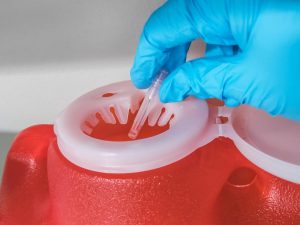
We recommend a simple routine at point of use: immediately place a used needle into a compliant receptacle. This habit reduces injury and keeps used needles contained before transport or pickup.
Immediate containment
After each use, drop needles and syringes straight into an FDA-cleared sharps disposal container at the point of care. This single step cuts the chance of accidental sticks and environmental contamination.
Container standards
Choose rigid plastic, leak-resistant containers that stand upright and have a tight, puncture-resistant lid. Ensure the container is properly labeled so that handlers recognize the biohazard risk.
Fill line and overfill prevention
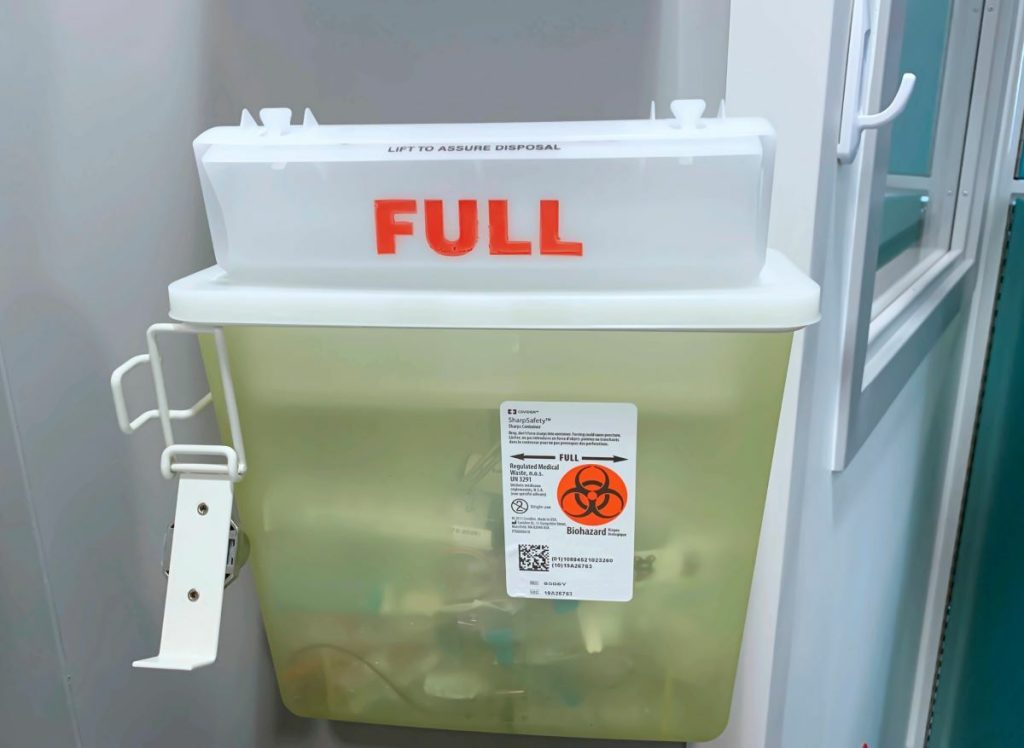
Watch the marked fill line. When a sharps disposal container reaches about three-quarters full, close it. Overfilling pushes items toward the opening and increases the risk of injury.
Do not reuse containers
Never recap, bend, break, or reuse a container. Reusing units or forcing contents down increases exposure and undermines safe use protocols.
Alternatives and safety at home
If an FDA-cleared sharps option is not available, briefly use a heavy-duty, leak-resistant household container (for example, a laundry detergent bottle) with a tight lid. Label it clearly and follow community guidelines for final pickup.
Keep containers out of reach
Secure containers so children and pets cannot access them. For facilities, stage a unit at each treatment area. For home health, give patients right-sized units and simple instructions.
| Step | Requirement | Why it matters |
|---|---|---|
| Immediate placement | FDA-cleared sharps disposal containers at the point of care | Reduces accidental sticks and contamination |
| Container selection | Rigid, leak-resistant, upright, labeled, puncture-resistant lid | Protects handlers and simplifies handling |
| Fill monitoring | Close at ~75% full | Prevents overfill and reduces risk |
| Temporary alternative | Heavy-duty household bottle, sealed, labeled | Short-term compliant option when needed |
We help teams standardize point-of-use procedures, suggest compliant containers and schedule routine or one-off pickups across Southern California from Fresno to San Diego. Regular training and documentation keep everyone aligned with safety guidelines.
Sharps Waste Disposal Options in Practice
Communities offer several practical options for final handling that keep used needles secure and services predictable.
Community Collection
Drop boxes and supervised sites at clinics, hospitals, pharmacies, health departments, and some public safety locations accept sealed disposal containers.
Household hazardous waste facilities also often take sealed units, which keep loose needles out of the trash and protect handlers.
Mail-back programs
Mail services provide a convenient option for remote or low-volume generators.
Confirm labeling rules, container size limits, and fees before sending. We advise facilities to verify compliance so shipments are accepted.
Residential pick-up and travel guidance
Special curbside or scheduled pick-ups dispatch trained teams to collect approved containers from homes.
For work travel and air transit, follow TSA rules, keep medicines labeled, and carry a physician’s letter to ease screening.
“Align community options with your pickup schedule to ensure smooth handoff and documentation for audits.”
| Option | Where | Notes |
|---|---|---|
| Drop boxes | Clinics, pharmacies, hospitals | Accept sealed containers; check local community guidelines |
| HHW sites | County or municipal collection centers | Often accept properly sealed household containers, which reduces trash exposure |
| Mail-back | Vendor-provided prepaid kits | Labeling and size-based fees apply; confirm container acceptance |
| Residential pickup | Scheduled or on-call local services | Trained handlers; verify container type and scheduling rules |
We coordinate compliant pickups for facilities and advise on community-aligned pathways so patients and staff have clear, safe options across Southern California.
We Serve Southern California: Offering Sharps Waste Disposal Solutions from Fresno to San Diego
From Fresno to San Diego, we offer tailored programs that match each facility’s workflow and compliance needs.
We partner with health care facilities of every size, providing compliant pickup and disposal
We are the trusted partner for hundreds of healthcare and businesses across the region. Our routes provide consistent service windows, documented chain-of-custody, and audit-ready records.
We suggest FDA-cleared sharps containers in multiple sizes, including travel options with a marked fill line. When a container is about three-quarters full, staff close it and follow local program rules for final handling.
- Custom programs for systems, ambulatory centers, physician groups, and labs.
- Right-sized container supply, placement, and scheduled pickups to fit clinical volume.
- Driver protocols that preserve chain-of-custody and regulatory compliance.
“We scale from single-site swaps to multi-facility rollouts while keeping service predictable and compliant.”
Contact us to request a Free Quote, get service details, and information on our Service Areas..
Conclusion
A clear, repeatable protocol makes it simple for teams and patients to manage used needles correctly.
Immediate placement in FDA-cleared sharps disposal containers, closing at the three-quarters mark, and never reusing a unit are the basics for reliable health care practice.
When FDA-cleared options are temporarily unavailable, use a sturdy, labeled bottle with a tight lid and follow community guidelines for final handling.
We support healthcare facilities and businesses from Fresno to San Diego with trusted, professional service and compliant pickup programs to keep used needles out of the trash and reduce exposure.
Contact us to get your questions answered, schedule service or consult with a medical waste disposal expert.
FAQ
What are the immediate steps we should take after using a contaminated needle or syringe?
We place the used item directly into an FDA-cleared, rigid, puncture-resistant container without recapping or bending. Keep the container upright and sealed, and never overfill it past the three-quarters mark. If an injury occurs, clean the site, seek medical attention, and report the incident per facility protocol.
Why does improper handling of contaminated sharps pose risks to health care staff and the community?
Needlestick injuries can transmit bloodborne pathogens such as hepatitis B, hepatitis C, and HIV. Improperly contained items can expose waste handlers, sanitation workers, household members, and the public. Following containment and labeling rules reduces infection risk and protects everyone along the chain of care.
What items in health care and home settings qualify as contaminated sharps?
Contaminated items include needles, syringes, lancets, pen needles, and other devices that puncture skin and contact blood or bodily fluids. For in-home care, that also covers insulin needles and lancets used for glucose testing. We treat any device used on a patient as potentially infectious.
How do we know if an item should be treated as regulated medical waste versus household hazardous waste?
Regulated medical waste refers to materials from health care or clinical operations that pose a biological or infectious risk and require licensed handling. Household-generated items such as sharps from personal diabetes care are often managed as household hazardous waste under local programs. We check local and state rules to confirm proper classification and disposal routes.
What features should we look for in a compliant containment container?
Choose a rigid plastic container with a leak-resistant, tight-fitting, puncture-resistant lid designed to remain upright. The container should be clearly labeled or color-coded and meet FDA criteria when specified. These features reduce puncture risk and accidental spills during handling and transport.
Is it ever acceptable to reuse a container or recap needles before disposal?
No. We never reuse containers or recap needles. Reusing increases the risk of needle-stick injuries and cross-contamination. Once a container reaches the recommended fill line, we seal and prepare it for disposal through an authorized program.
What can we use when an FDA-cleared container is not available at home?
As a temporary measure, use a heavy-duty plastic container such as a laundry detergent jug with a screw-top lid—only if it is rigid, puncture-resistant, and leak-proof. Label it clearly and follow fill-line guidance. Arrange transfer to an approved collection site or mail-back service as soon as possible.
How do we prevent overfill, and what is the correct fill level?
We stop adding items when the container reaches three-quarters full. This limit prevents accidental punctures when closing the lid and allows safe handling. If no fill line exists, we estimate and retire the container well before it becomes compacted with contents.
Where can we take sealed containers for collection in the community?
Options include pharmacy drop boxes, supervised collection events, household hazardous waste (HHW) facilities, and designated health care collection points. Availability varies by municipality, so consult local public health or recycling websites to find the nearest approved location.
How do mail-back programs work, and what should we watch for?
Mail-back programs provide pre-labeled containers or accept properly packaged containers for shipment to a licensed processor. Confirm container size limits, labeling rules, and any service fees. Follow the program’s packing instructions to meet shipping and safety regulations.
What precautions should we take when traveling or working away from home with needles and syringes?
Carry devices and containers in their original packaging or an approved transport container. For air travel, follow TSA rules and carry documentation from your clinician when necessary. Never dispose of containers in public trash unless local rules allow it; instead, use approved drop-off or mail-back options at our destination.
How do we protect children and pets from access to used needle containers at home?
Store containers out of reach and lock them when possible. Place them in high cabinets or locked utility rooms. When full, seal the lid and move the container promptly to a secure staging area for pickup.
How do we partner with health care facilities to arrange compliant pickup and processing from Fresno to San Diego?
Glycon is a licensed hazardous and medical waste transporter that serves treatment facilities of all sizes throughout Southern California. We ensure scheduled collections, proper manifesting, and regulatory compliance. We tailor pickup frequency to each facility’s patient volume and operational needs. For more information, do not hesitate to call us at 844-494-8222. We are here when you need us!